
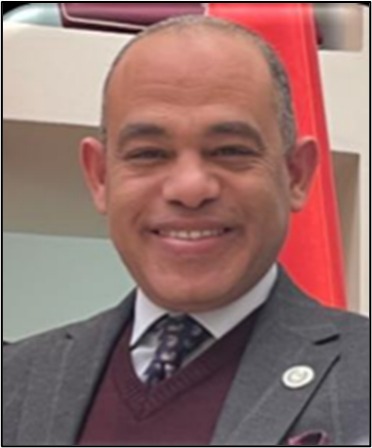
Prof. Hussein Sabit
Vice Dean for Graduate Studies and Research and, Professor of Genetics
Prof. Hussein Sabit, Vice Dean for Graduate Studies and Research and, Professor of Genetics
Email: hussein.sabit@must.edu.eg
Google Scholar: https://scholar.google.com/citations?hl=en&user=seoZyrQAAAAJ
Dr. Hussein Sabit is a distinguished Professor of Cancer Epigenetics and currently serves as the Vice Dean for Graduate Studies and Research at the College of Biotechnology, Misr University for Science and Technology (MUST) in Giza, Egypt. With an academic career spanning more than two decades, Dr. Sabit has established himself as a leading figure in molecular genetics, particularly in the intricate mechanisms underlying cancer progression and its therapeutic targeting.
Born in Cairo, Egypt, on July 30, 1974, Dr. Sabit began his scientific career at Ain Shams University, where he earned his bachelor’s degree in Genetics in 1997, followed by an M.Sc. in Genetics in 2002. His expertise was further strengthened with a Ph.D. in Molecular Genetics from Ain Shams University in 2007. This solid academic foundation paved the way for his specialized focus on cancer research, which he has pursued with dedication for 17 years following the completion of his Ph.D.
Dr. Sabit’s professional journey at Misr University for Science and Technology began in 2002 as a Lecturer Assistant. He advanced through several academic ranks, becoming an Assistant Professor (2007–2012), Associate Professor (2012–2017), and ultimately a Professor of Cancer Epigenetics in 2017. His academic contributions extended beyond MUST through his tenure as a Professor of Cancer Epigenetics at the Institute for Research and Medical Consultations (IRMC), Imam Abdulrahman Bin Faisal University, Dammam, Saudi Arabia (2018–2021), where he also chaired the Department of Genetics from 2019 to 2021. He returned to MUST in 2021 to assume his current role as Vice Dean for Graduate Studies and Research.
His research interests lie at the forefront of modern cancer biology, with a particular emphasis on breast cancer. Dr. Sabit’s work focuses on genome editing using CRISPR/Cas9, the role of anti-apoptotic genes in breast cancer progression, epigenetic modulation through DNA methylation, and chromatin remodeling as a key mechanism in carcinogenesis. His research expertise spans a wide range of advanced techniques, including conventional and real-time PCR, cell line culture, methylation-based sequencing, cloning, Western blotting, RNAi analysis, and various vivo assays, in addition to advanced CRISPR applications.
Beyond his direct research contributions, Dr. Sabit is a prolific author and collaborator. His publication record includes 94 articles with a total impact factor of 237.8, an h-index of 21, and more than 1,400 citations, with a substantial proportion published in Q1 and Q2 journals. His most recent works in 2025 reflect his continued scholarly impact, featuring publications in Molecular Cancer and Pharmaceuticals on topics ranging from natural nanoparticles for drug delivery to personalized breast cancer management using single-cell multi-omics technologies. He has also served as a Co-PI in seven national and international collaborative research projects involving institutions in Germany, Saudi Arabia, Spain, Turkey, and the United States, covering areas such as viral antigenic genes, CRISPR/Cas9-based cancer research, and pest control applications.
Dr. Sabit’s leadership and administrative experience are evident through his contributions to the development of postgraduate programs at both MUST and Imam Abdulrahman Bin Faisal University, his long-standing membership in Postgraduate and Scientific Research Committees, and his key role as a team leader in institutional accreditation initiatives. He previously served as Vice Dean for Community Services at MUST (2014–2018) and as Secretary of the College Council for eight years.
A strong advocate of scientific outreach and community engagement, Dr. Sabit is recognized for his excellent communication skills and active interaction with international students, delivering lectures and tutorials to learners from Europe, Africa, Asia, and the Americas. His commitment to public science education is reflected in his involvement with Egyptian NGOs focused on interfaith dialogue and humanitarian initiatives, as well as his earlier contributions to scientific television programs.
Dr. Hussein Sabit is a distinguished academic, a pioneering researcher in cancer epigenetics, and a dedicated institutional leader. His career embodies a unique integration of scientific innovation, academic leadership, international collaboration, and meaningful societal engagement.


