












About College

The College of Biotechnology at Misr University for Science and Technology (MUST) was established in 2006 by Presidential Decree No. 283, under the leadership of Mr. Khaled El-Toukhy, Chancellor, Chairman of the Board of Trustees.

The College offers a four-year Bachelor of Science (B.Sc.) in Biotechnology, approved by Ministerial Decree No. 129 on 12 August 2009. It also offers a Master of Science (M.Sc.) in Biotechnology, approved by Ministerial Decree No. 776 on 16 March 2015, with two specialized tracks: Medical and Pharmaceutical Biotechnology, and Environmental and Agricultural Biotechnology. Through its academic programs and research activities, the College continues to promote excellence, innovation, and the professional development of its students and faculty members.

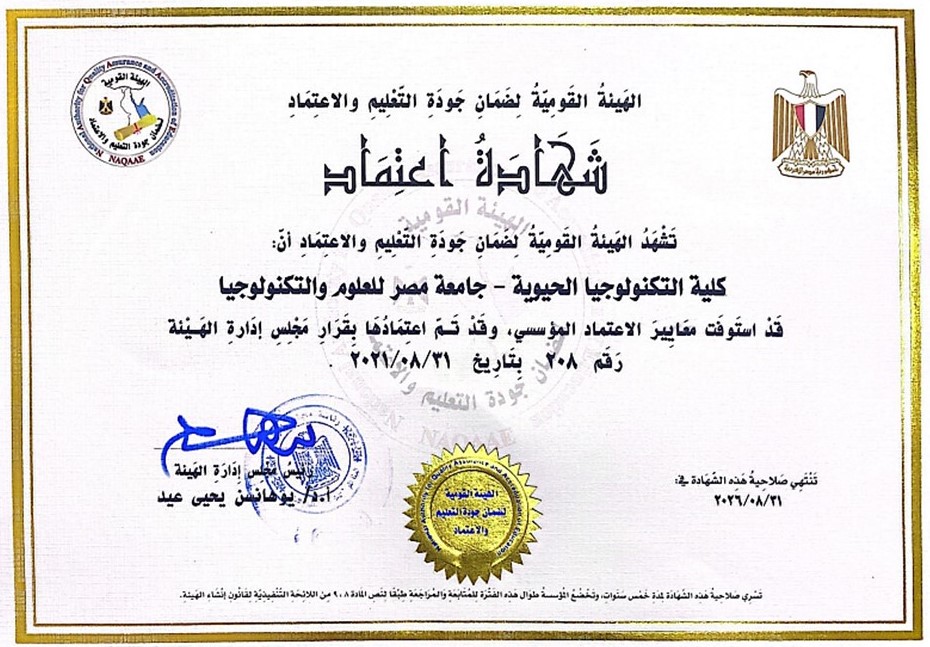
The College of Biotechnology is accredited by the National Authority for Quality Assurance and Accreditation of Education (NAQAAE). The College received its official accreditation on 31 August 2021 after successfully meeting all national standards related to academic quality, institutional performance, research productivity, and student services. This recognition reflects the College’s ongoing commitment to maintaining excellence

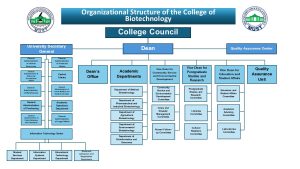
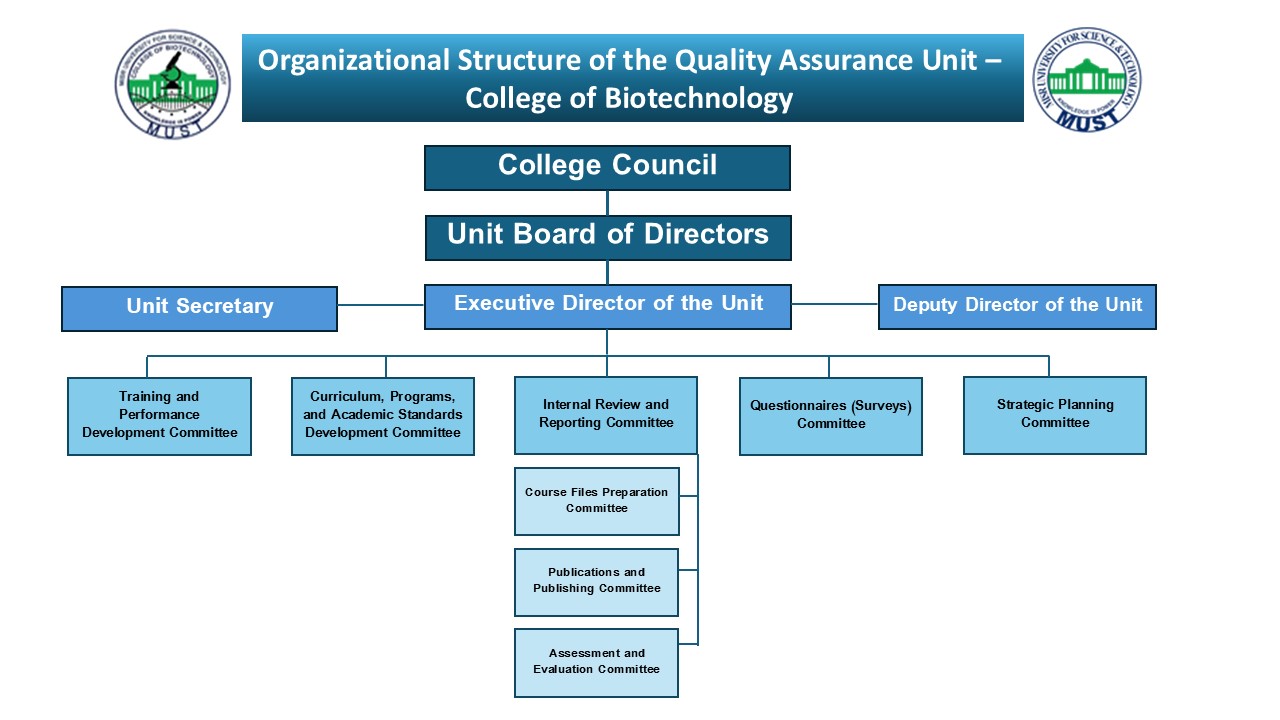
Organizational Structure

College Departments

The College of Biotechnology – Misr University for Science and Technology is committed to graduating Biotechnology specialists in accordance with accredited academic standards, who meet the needs of the local and regional labor market in the Medical, Pharmaceutical, Agricultural, and Environmental sectors. The College also conducts innovative scientific research and provides community services within the framework of progressive values, in a manner that achieves the goals of sustainable development in light of Egypt’s Vision 2030.

To be a leading College in the field of Biotechnology at the local, regional, and international levels.

  1. Enhancing institutional capacity to maintain the College competitive position
  2. Maintaining academic accreditation and developing the quality assurance systems within the College.
  3. Consolidating the College position as a leading scientific institution in the fields of biotechnology.
  4. Developing the scientific research and postgraduate studies system in alignment with sustainable development goals.
  5. Strengthening the College role in community service and environmental development.

Student’s Labs

  • Lab A, Biotechnology’s Building 
  • Lab B, Biotechnology Building
  • Lab 301, Student Service Building (SS)
  • Lab 302, Student Service Building (SS)
  • Lab 522, Mass communication building (MC)
  • Lab 521, Mass communication building (MC)
  • Lab 417, Student Service Building (SS)
  • Lab 114 B, Student Service Building (SS)
  • Lab 113 B, Student Service Building (SS)

Research Labs

  • Genetic Engineering Lab
  • Plant Tissue Culture Lab
  • Animal Tissue Culture Lab
  • Molecular Diagnosis Lab

Welcome to the College of Biotechnology.


It is my honour to welcome you to an institution dedicated to excellence in one of the most influential scientific fields of our time. Biotechnology stands at the forefront of global progress, shaping the future of healthcare, agriculture, industry, and environmental sustainability. As the world faces complex challenges from emerging diseases to climate change and food security, the need for innovative biotechnological solutions has never been greater. Your decision to study biotechnology is therefore not only academically significant but also vital to addressing the critical needs of society.

At the College of Biotechnology, we offer an academic environment that promotes rigorous scientific training, ethical responsibility, and research-driven innovation. Under the mentorship of distinguished faculty members, you will develop the knowledge and analytical skills needed to translate fundamental biological understanding into practical solutions, such as novel diagnostic tools, therapeutic strategies, sustainable technologies, agricultural innovations, vaccines, and bio-based industrial applications. In doing so, you will be prepared to make meaningful contributions to human health, environmental protection, and sustainable development, supporting global sustainability priorities and advancing the United Nations Sustainable Development Goals (SDGs) for the benefit of communities, industries, and future generations.

As you begin your academic journey, I encourage you to approach every challenge with determination, intellectual curiosity, and a commitment to excellence. Your time here will shape your scientific identity and prepare you to become leaders in biotechnology research, innovation, and practice.

Once again, welcome to the College of Biotechnology. I look forward to witnessing your achievements and contributions to this vital and ever-evolving field.

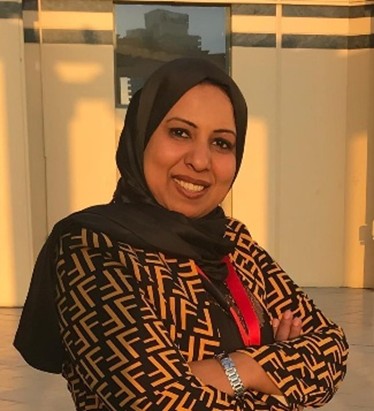
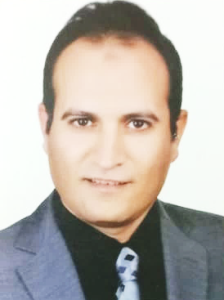
Prof. Dr. Hala F. Eissa
Dean, College of Biotechnology

  • Primer Design Workshop: Strategies for Effective Primer Design
  • Molecular Docking and Drug Design Workshop: Understanding Protein-Ligand Interactions
  • SNP Analysis Workshop: Unraveling Genetic Variations
  • RNA-Seq Analysis Workshop: From Data Generation to Interpretation
  • Whole Genome Bacterial Identification Workshop: Techniques and Applications
  • Scientific research title: how to craft it.
  • Impact factor vs quartile
  • How to submit a paper
  • Secrets of P-value
  • How to write a scientific paper
  • First aid measures 
  • Prevention of communicable diseases 
  • Prevention of non-communicable diseases 
  • Infection control 
  • Quality assurance 
  • Evidence-based medicine
  • Clinical nutrition and dietetics 
  • General epidemiology 
  • Epidemiology of communicable and non-communicable diseases
  • Drug discovery (Structure elucidation of bioactive natural products)
  • proteome analysis
  • Biofertilizers and biopesticides: From lab to the market
  • Biological treatment and recycling of Industrial wastewater
  • Theories of wellbeing 
  • Eco-friendly candle making workshop. 
  • Plastic pollution and climate change 
  • Reusable bottles Garden 
  • Time management workshop 
  • How to write a CV
  • Production of high-quality organic fertilizers using recent techniques of biotechnology and mitigate climate changes: (Aerated static composting, Encapsulated bacteria and Enzymes, Solid state fermentation, Applications of Artificial intelligence to process techniques). 
  • Applications of biotechnology in Wastewater treatment plants and mitigate climate changes: (Conventional treatment plants, Sequential Batch reactors, Collaboration with Artificial intelligence).
  • Applications of biotechnology in the production of energy resources and mitigate climate changes: (Bioethanol production, Green Biohydrogen production).
  • Production of biopesticides and study its effects against plants pathogens and mitigate climate changes: (Lab scale production, large scale production).
  • Applications of recent techniques of biodegradation to solve environmental problems.
  • Strategic Planning
  • External audit of higher education institutions
  • Self-evaluation of higher education institutions
  • Effective teaching and learning strategies.
  • Organizing examinations and evaluating students in higher education institutions
  • International publishing of scientific research
  • Internet applications in administrative work
  • Safety, health, and occupational health procedures in laboratories

  1. memorandum of understanding between the College of Biotechnology, Misr University for Science and Technology and the University of Kuopio in Finland.

This memorandum aims for international cooperation and academic and student exchange between the two sides.

2. A memorandum of understanding between the College of Biotechnology, Misr University for Science and Technology, and the School of Biology, Newcastle University, England.

The objective is to foster international collaboration and facilitate the exchange of academics and students between the two parties.

3. A letter of international cooperation structure between the College of Biotechnology, Misr University for Science and Technology, and Glasgow Caledonian University in Scotland.

This letter aims to seek to achieve a joint scientific cooperation agreement between the two sides.

4. A memorandum of understanding between the College of Biotechnology, Misr University of Science and Technology, and the Faculty of Science, University of Hong Kong, China.

This memorandum aims to agree to provide education and training in scientific research for graduates.

5. A letter of international cooperation structure between the College of Biotechnology, Misr University of Science and Technology, and the Indian Center for Regenerative Medicine and Engineering, Faculty of Medicine, University of India.

This letter aims to seek to achieve a joint scientific and research cooperation agreement between the two sides.

Program of Study

The student is required to complete  successfully a minimum of 144 Credit Hours, according to bylaw 2018, for graduation distributed as follows:  

  • University requirement: 15 Credit Hours
  • College requirements: 129 Credit Hours (105 Compulsory & 24 Elective)


Post Graduate programs

  • Masters in Medical and Pharmaceutical Biotechnology
  • Masters in Environmental and Agricultural Biotechnology 

The College of Biotechnology is accredited by the National Authority for Quality Assurance and Accreditation (NAQAA).

Career Paths and Practical Experience

The College Paves The Way For An Exceptional Career Path!

Graduate Affairs and Career Advising committee goals:

  1. Enhance Communication: Improve outreach to graduates to boost their participation in College of Biotechnology events and activities.
  2. Foster Partnerships: Collaborate with external stakeholders for internship programs, conferences, seminars, and workshops.
  3. Annual Job Fair: Organize a yearly job fair connecting graduates with various corporate and career opportunities.
  4. Career Guidance: Provide support to help graduates identify and pursue future employment opportunities.
  5. Curriculum Development: Update the academic curriculum and research plans to align with labor market needs through collaboration with employment agencies.
  6. Monitor Employment Alignment: Assess graduates’ job conditions to ensure they align with their qualifications, offering training workshops to enhance relevant skills.
  7. Keep Graduates Informed: Update graduates on new developments in academia and research.
  8. Graduate Database: Create a database for effective communication with graduates and alumni.
  9. Reputation Assessment: Gather labor market feedback on graduates to evaluate their reputation.
  10. Identify Labor Market Challenges: Determine the key challenges graduates face in the job market.
  11. Annual Graduate Guide: Publish a yearly guide for graduates with information on job opportunities and industry trends.

College Sector

College Requirements

See More

Scientific Degrees

The College of Biotechnology at Misr University for Science and Technology was established in 2006 by Presidential Decree Number 283 to serve the region and other countries by preparing the graduates to carry out their responsibilities taking into consideration our heritage in an industrialized challenging world.

  • The Bachelor's degree in Biotechnology